Following the first integration of data from the One Ocean Expedition into the Copernicus Marine catalogue in 2022, the Copernicus Marine Service continues to expand its in situ data offer with new observations from the 2025–2026 campaign. The Statsraad Lehmkuhl, one of the world’s largest sailing ships still in operation, is once again contributing to global ocean observation efforts as a floating ambassador of the United Nations Ocean Decade. As part of its expedition, the vessel collects key ocean variables using onboard scientific instrumentation.
From ship to data in Near Real Time
Equipped with a ferrybox ocean monitoring system, the vessel continuously measures seawater temperature and salinity along its sailing route. The system is connected to the ship’s seawater intake and provides observations at high temporal resolution.
The observations acquired onboard are transmitted and integrated into the Copernicus Marine catalogue in near real time, ensuring a continuous flow of data from acquisition to dissemination and enabling timely access to in situ measurements along the vessel’s trajectory.
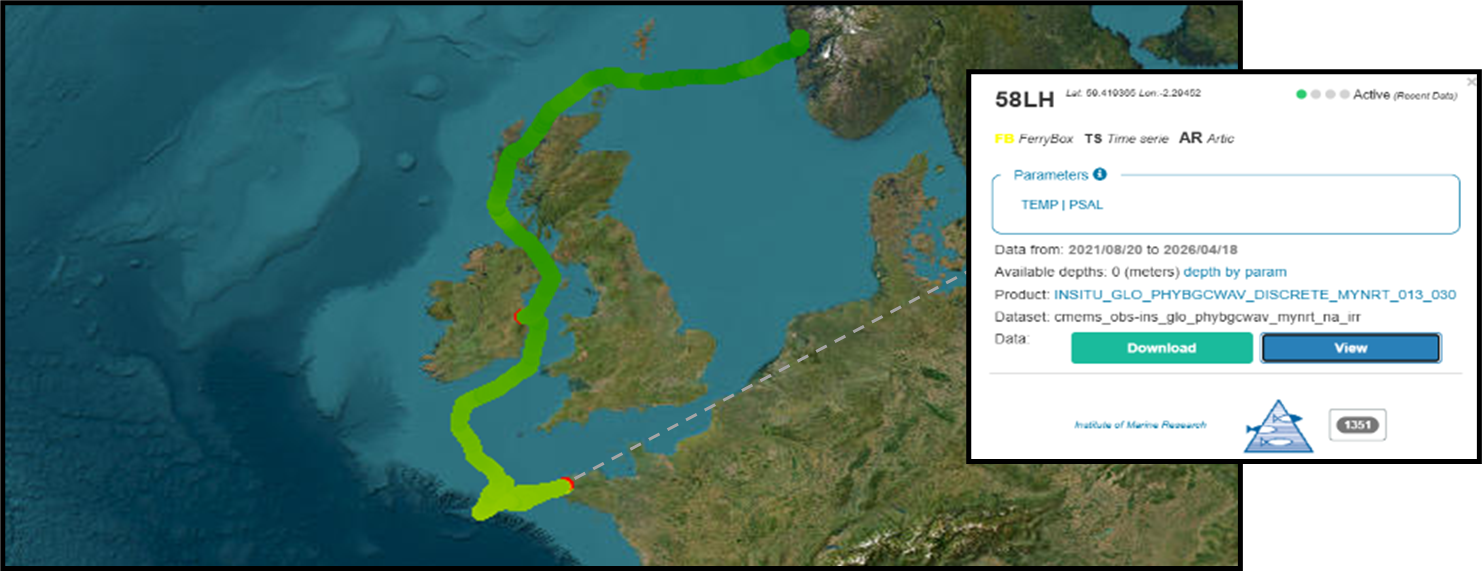
During a recent stopover of the Statsraad Lehmkuhl in Brest (France), where the In Situ Thematic Assembly Centre (In Situ TAC) is coordinated by Ifremer, this process was fully operational, with data seamlessly integrated into the catalogue.
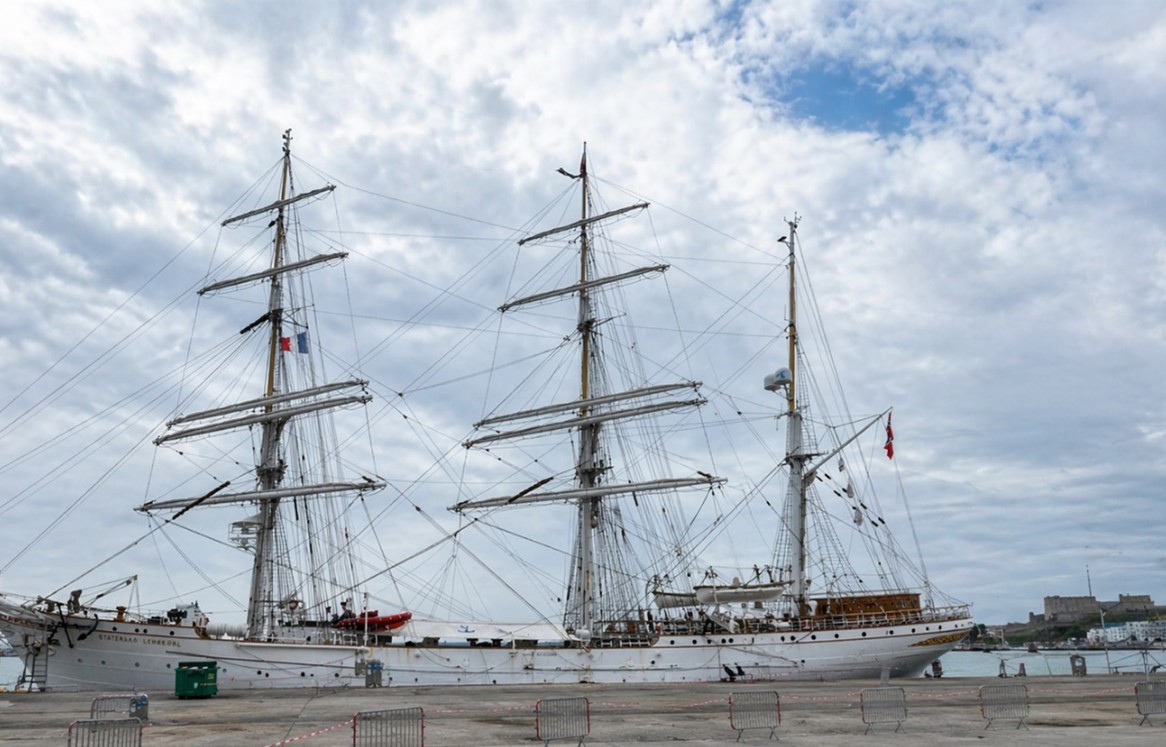
Trajectory of the Statsraad Lehmkuhl between Brest and Bergen displayed in the In Situ TAC dashboard.
Continuous ocean monitoring from a moving platform
The collected observations were transmitted and integrated via the In Situ TAC MYNRT (Multi Year Near Real Time) products.
This dataset highlights the value of opportunistic observing systems, such as instrumented vessels, in complementing traditional ocean observing networks. By collecting data along transoceanic routes, these platforms help improve spatial coverage, particularly in regions where in situ observations are sparse.
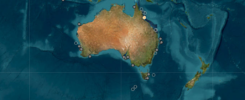
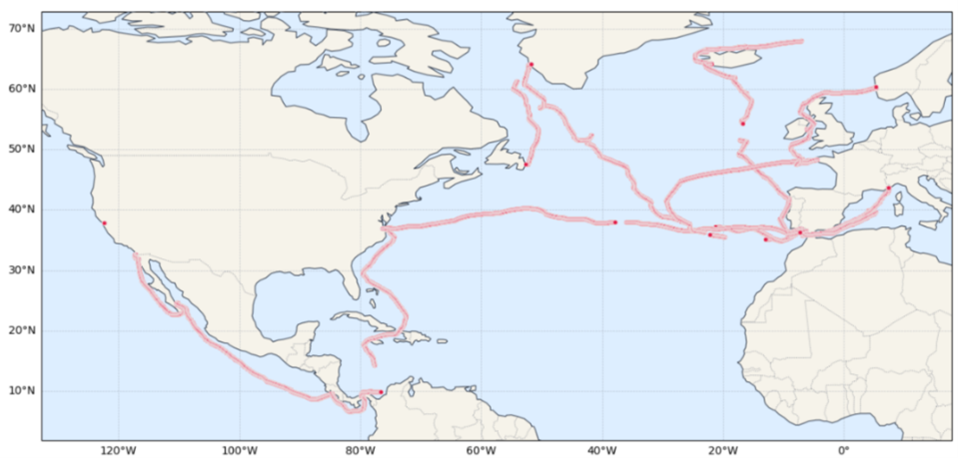
Total data trajectory from the One Ocean Expedition 2025–2026 available in the Copernicus Marine Data Store. The original sailing route was modified during the expedition due to difficult ice conditions in the Northwest Passage. As a result, together with some interruptions in data transmission, the recorded trajectory is not continuous.
A continued contribution to ocean knowledge
The One Ocean Expedition remains a flagship initiative contributing to the United Nations Decade of Ocean Science for Sustainable Development, promoting ocean knowledge, education, and international collaboration.
The continuation of data integration from the 2025–2026 campaign confirms the long-term value of this initiative for the Copernicus Marine Service. The In Situ TAC remains committed to integrating diverse and high-quality in situ data streams to support users worldwide.