During the second quarter of 2026, the Copernicus Marine In Situ Thematic Assembly Centre (In Situ TAC) continued to enhance its marine observation services by integrating new data streams, expanding observing networks, and improving historical marine datasets. The latest developments span the Iberian, Baltic, North West Shelf, and Global components of the In Situ TAC, contributing to more comprehensive marine observations for operational oceanography, climate monitoring, and marine environmental research.
Iberian Region
Work continued towards the publication of delayed-mode biogeochemical (BGC) datasets from Portuguese observing networks. Collaboration with the Portuguese National Centre providers (Connect+ and MCIS) focused on coordinating the reprocessing of historical datasets, including quality control procedures and metadata improvements.
Baltic Region
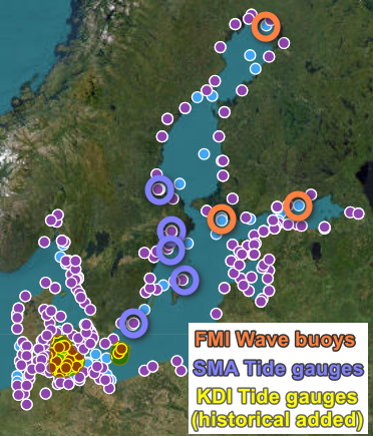
Several new datasets were incorporated into the Baltic observing system, further strengthening regional sea level and wave monitoring capabilities.
Three wave buoys operated by the Finnish Meteorological Institute were integrated, providing both near-real-time and historical wave observations. In Sweden, five tide gauge stations located in private harbors were added through the Swedish Maritime Administration, making both near-real-time and historical sea level records available to users. In addition, historical sea level datasets supplied by the Danish Coastal Authority (Kystdirektoratet) were integrated, extending the long-term archive available for coastal monitoring and climate-related applications.
North West Shelf Region
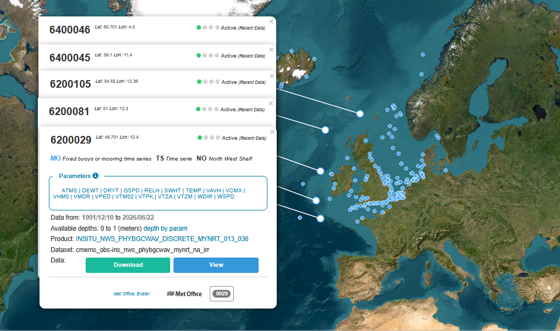
A major enhancement was implemented for the UK Met Office observing network through the establishment of a new near-real-time workflow covering seven offshore buoys and four light vessels. The migration from NOAA-NDBC data access to the Amazon Sustainability Data Initiative (ASDI) infrastructure restores the availability of wave observations from several open-ocean buoys that had not been accessible through the In Situ TAC since approximately 2020. The new workflow also provides additional meteorological and wave parameters, enriching the information available to Copernicus Marine users.
Further progress was achieved through initial collaboration with the National Oceanography Centre (NOC) regarding the Porcupine Abyssal Plain (PAP) observatory. The platform collects wave and meteorological observations in cooperation with the UK Met Office, together with biogeochemical measurements managed by NOC. Discussions have started to establish a near-real-time data flow into the In Situ TAC, complementing the historical BGC datasets already available through OceanSITES.
Global Region
Several important developments were completed within the Global component of the In Situ TAC.
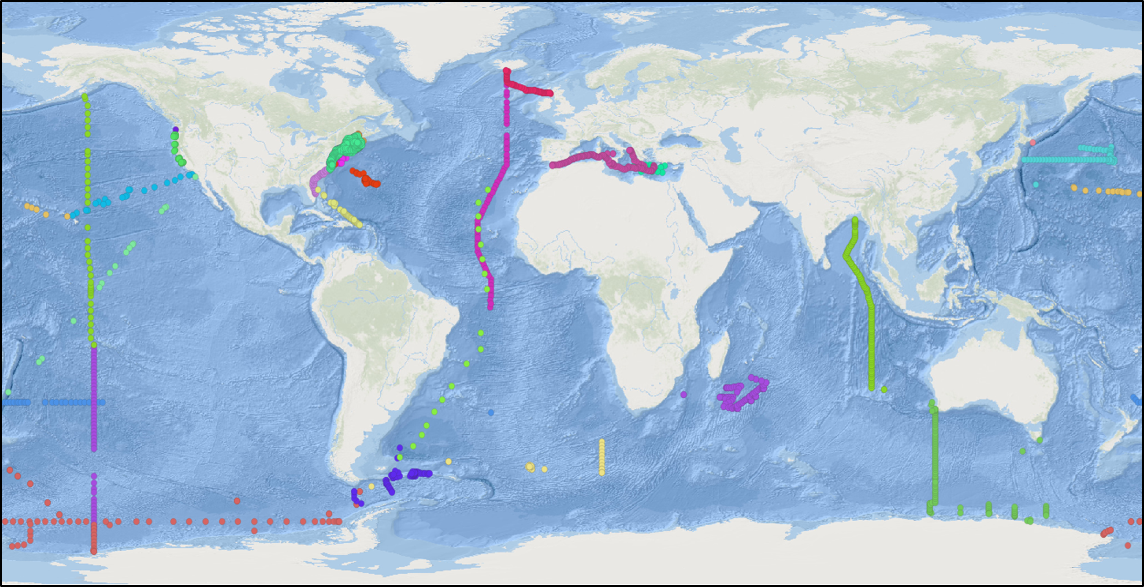
Historical conductivity-temperature-depth (CTD) and bottle datasets from the World Ocean Database (WOD) were synchronized with updates released since August 2025, ensuring that the Copernicus Marine archive remains aligned with one of the world’s principal oceanographic repositories.
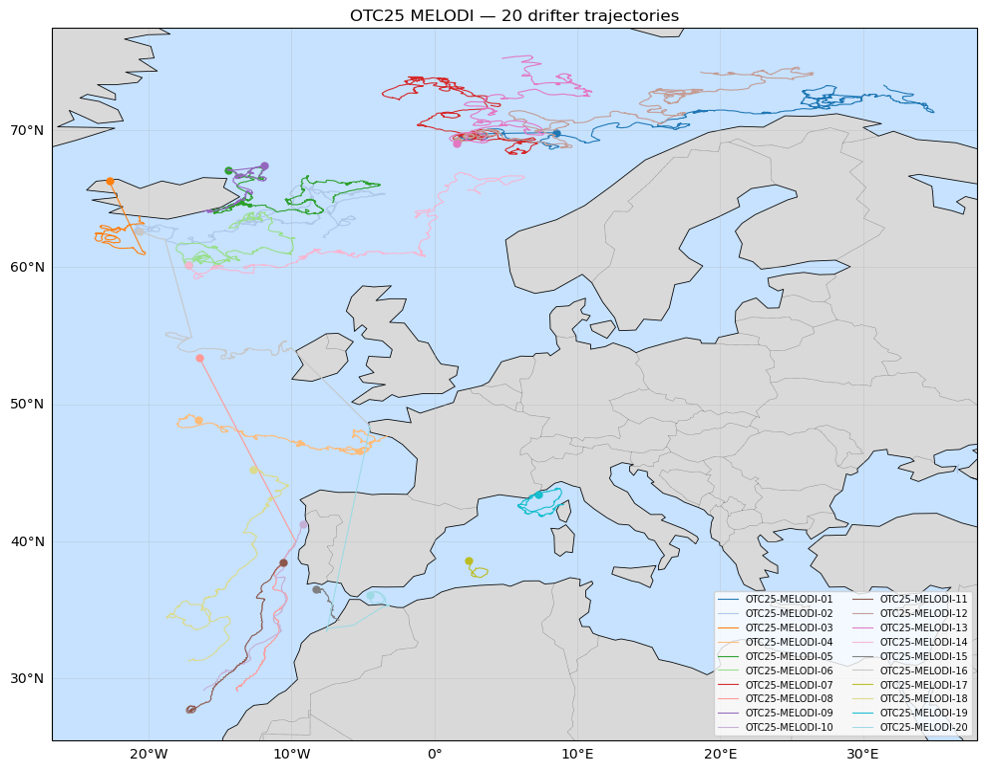
Work also continued on the reprocessing of spectral wave observations from the U.S. National Data Buoy Center (NDBC), improving the consistency of these long-term records. In parallel, drifting buoy observations from the MELODI programme, including sea surface temperature (SST) and wave measurements, were integrated into the global collection.
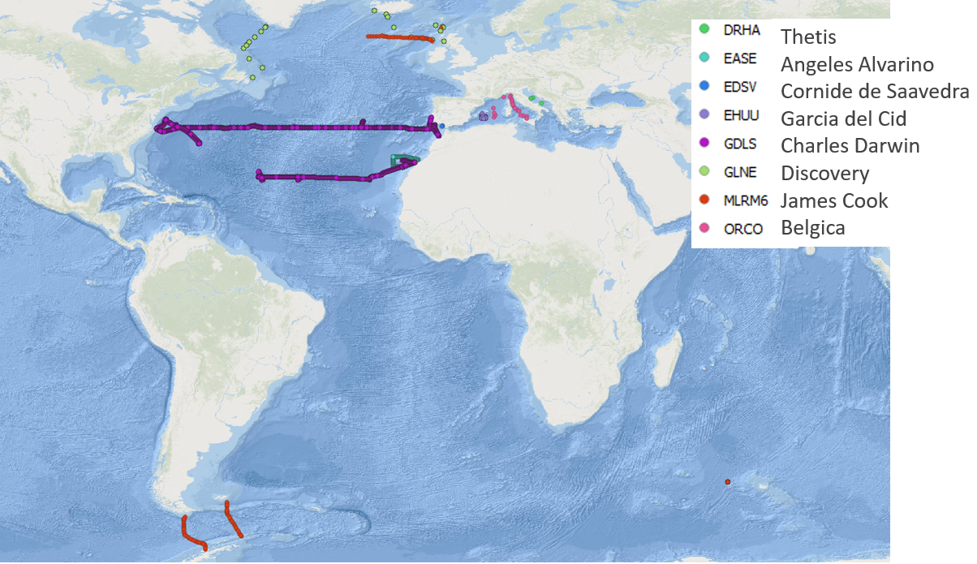
Additional progress was achieved through the incorporation of Acoustic Doppler Current Profiler (ADCP) observations from SeaDataNet, expanding the availability of current profile measurements within the global in situ data archive.
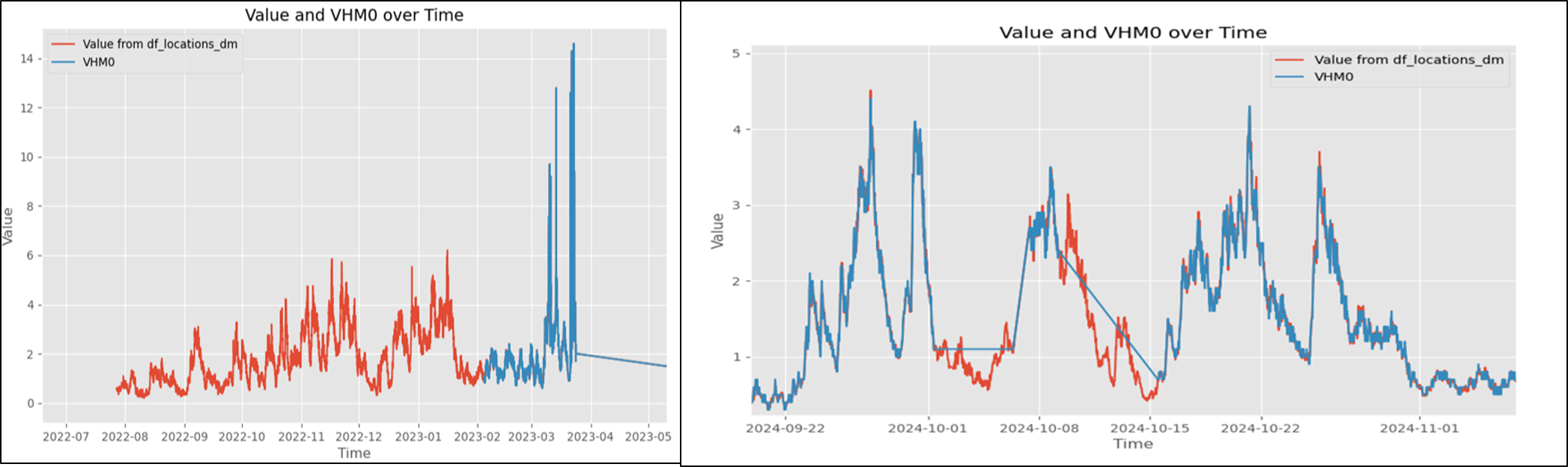
Reprocessing activities also continued for the French coastal wave buoy network (CANDHIS) using the Cerema API, with the integration of VMDR (mean wave direction) information underway. As this work is still in progress, further updates and the complete dataset are expected to become available during the next reporting period.